Gold Britannia Coin 2026: Price, CGT Status and Security Features

A 1 oz gold Britannia is worth about $3,882.08 as of 4 August 2026, with gold at $4,082.80 per troy ounce. The Britannia is the Royal Mint's flagship bullion coin: 999.9 fine, one full troy ounce, and — the detail that matters most to British buyers — UK legal tender, which makes it exempt from capital gains tax for UK residents. That exemption can be worth far more than any premium you save shopping elsewhere. This guide covers prices across every size, the coin's security features, and when a Britannia beats a Krugerrand or Maple Leaf.
How much is a 1 oz gold Britannia worth today?
About $3,882.08 on 4 August 2026, at a gold spot price of $4,082.80 per troy ounce, which is roughly £2,888.54 or €3,372.45. A Britannia holds exactly one troy ounce of fine gold, so its melt value equals the spot price directly. Gold moves continuously — check a live quote before you commit.
Why is the gold Britannia capital gains tax free?
Because it is UK legal tender. A 1 oz gold Britannia carries a face value of £100, and under UK rules gains on legal-tender British coins are exempt from capital gains tax for UK residents. That applies to Britannias and Sovereigns; it does not apply to a Krugerrand, a Maple Leaf or a gold bar, all of which are foreign or non-tender and therefore fall inside CGT. On a holding that appreciates substantially the exemption can dwarf the few dollars you might save buying a cheaper coin, which is precisely why Britannias dominate British portfolios. Investment gold is also VAT-exempt in the UK and EU. Tax rules change and depend on your circumstances, so confirm your own position — we are a bullion dealer, not tax advisers.
What does each Britannia size cost?
The Royal Mint strikes the Britannia in coin and bar form. Current prices from stock:
| Format | Fine gold | Price | Cost per fine ounce |
|---|---|---|---|
| 1/4 oz coin | 0.250 oz | $970.52 | $3,882.08 |
| 1/2 oz coin | 0.500 oz | $1,941.04 | $3,882.08 |
| 1 oz coin | 1.000 oz | $3,882.08 | $3,882.08 |
| 10 g bar | 0.322 oz | $1,248.13 | $3,882.09 |
| 20 g bar | 0.643 oz | $2,496.22 | $3,882.09 |
| 50 g bar | 1.608 oz | $5,616.54 | $3,493.87 |
| 100 g bar | 3.215 oz | $11,233.04 | $3,493.87 |
That last point is easy to miss and expensive to get wrong: a Britannia bar is not legal tender. It carries the same Royal Mint provenance and the same 999.9 gold, but none of the capital gains exemption. If tax efficiency is your reason for choosing Britannia, buy the coins, not the bars.
What security features does the Britannia have?
Since 2021 the Britannia has carried what the Royal Mint describes as the most advanced set of visual security features on any bullion coin, layered into the design itself rather than added as packaging:
- Surface animation — a field of lines behind Britannia that shifts to reveal a moving trident as the coin is tilted
- Latent feature — an image that alternates between a padlock and a trident depending on viewing angle
- Micro-text — miniature lettering readable only under magnification
- Tincture lines — fine heraldic hatching that is extremely difficult to reproduce at scale
These matter commercially, not just aesthetically. Counterfeit bullion is a genuine problem, and features that a buyer can verify by eye — without an assay, a scale or a Sigma tester — make a coin faster and easier to resell. Our guide to spotting fake gold and silver covers verification in more depth.
Has the Britannia always been 999.9 fine?
No, and this catches out buyers of older coins. From its 1987 launch until 2012 the gold Britannia was struck at 916 fineness (22 karat), alloyed much like a Krugerrand. From 2013 onward the Royal Mint moved to 999.9. Both versions contain a full troy ounce of fine gold, so their bullion value is identical — the pre-2013 coins simply weigh more overall. The other visible change came in 2023, when the effigy of King Charles III replaced Queen Elizabeth II, making the 2023 Elizabeth II issue the final year of that portrait.
Should you buy a Britannia or a Krugerrand?
It comes down to where you are tax resident. For a UK resident, the Britannia's CGT exemption is usually decisive — a Krugerrand's slightly lower premium is quickly wiped out by a tax bill on any meaningful gain. For buyers outside the UK the exemption is irrelevant, and the choice reverts to premium and preference: the Krugerrand is typically cheaper and far more scratch-resistant, while the Britannia offers 999.9 purity and stronger anti-counterfeit design. Both are recognised by every dealer worldwide, and both can be paid for here in Bitcoin, Monero or stablecoins with the price locked at order time.
Ready to convert crypto into gold?
Buy investment-grade gold and silver with Bitcoin, priced live to the market and shipped fully insured.
Shop bullionFrequently asked questions
How much is a 1 oz gold Britannia worth?
Is the gold Britannia really capital gains tax free?
Are Britannia gold bars also CGT exempt?
What purity is a gold Britannia?
How can I tell a Britannia is genuine?
Related reading
Best Gold Coins to Buy for Investment in 2026
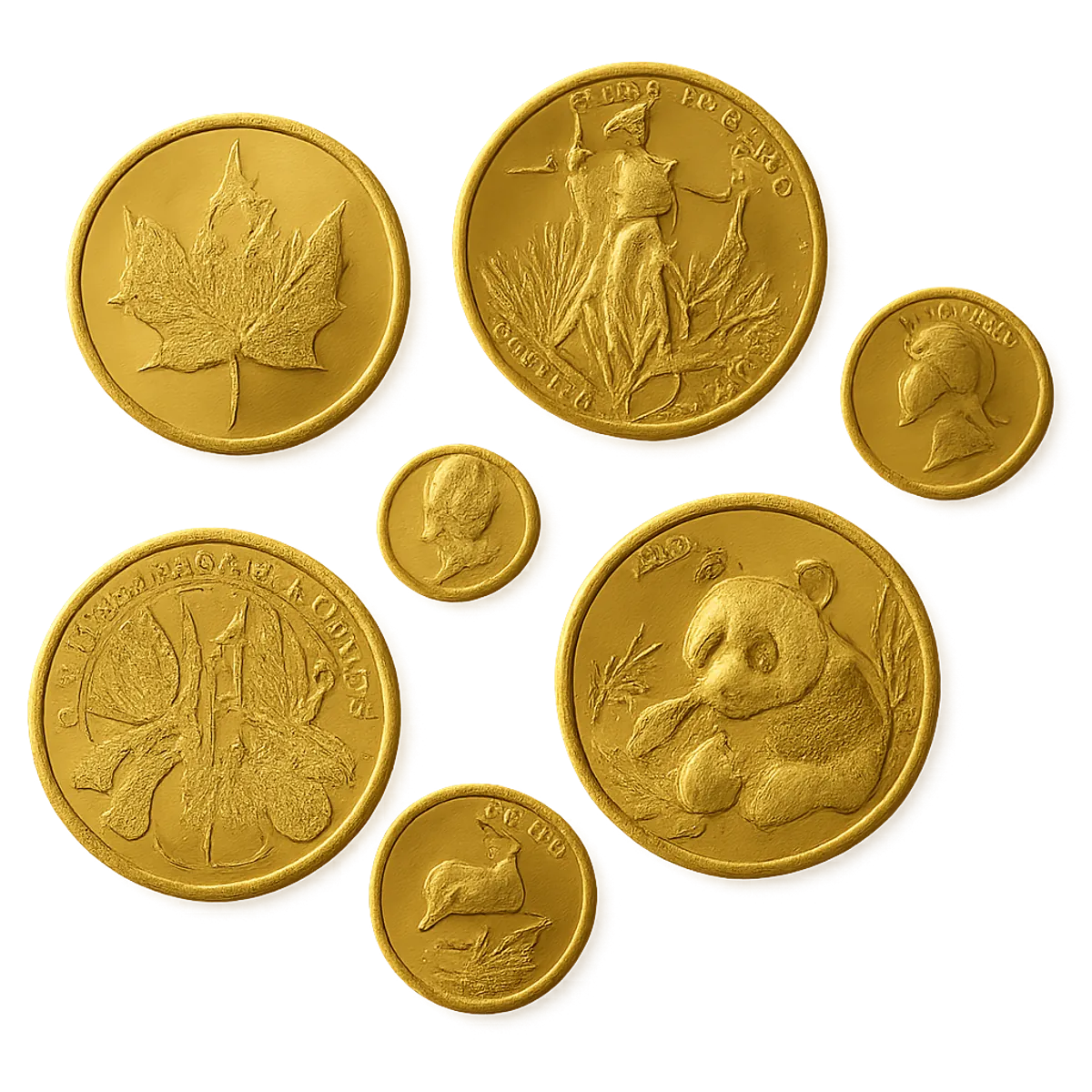
A buyer's guide to the best 1 oz gold investment coins in 2026 — comparing the Maple Leaf, Krugerrand, Buffalo, Britannia and Philharmonic on purity, premium and resale.
Read article →
Is Gold Tax-Free? VAT and Capital Gains on Gold & Silver Explained
Investment gold enjoys some of the friendliest tax treatment of any asset — but the rules differ for silver, for coins vs bars, and by country.
Read article →
How to Spot Fake Gold & Silver: The 2026 Testing Guide
The tests that actually work for checking gold and silver at home, why tungsten fakes beat most of them, the professional tools that catch them, and the simplest way to never buy a fake.
Read article →