Gold Krugerrand Price 2026: Value, Sizes and What to Pay
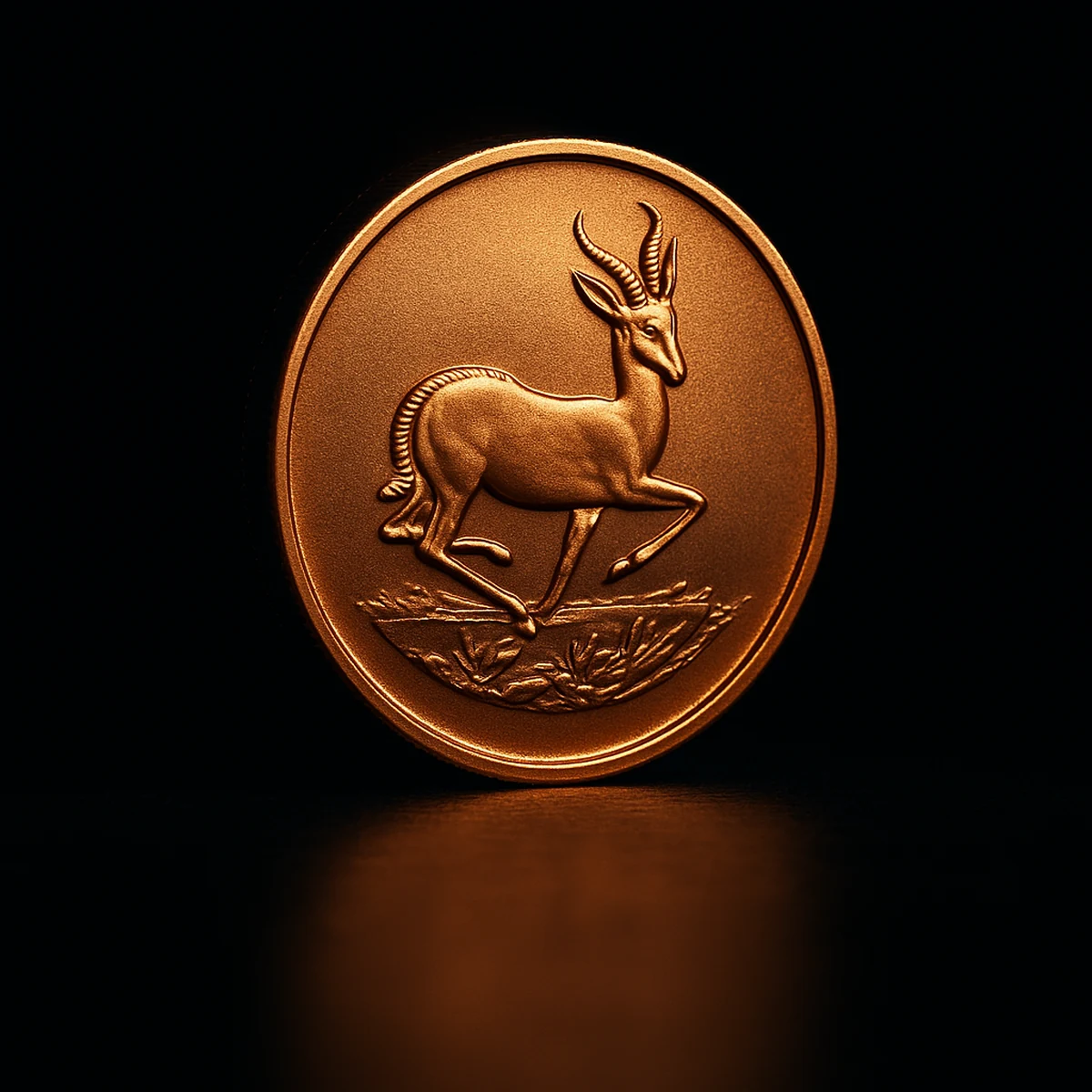
A 1 oz gold Krugerrand is worth about $3,882.08 as of 4 August 2026, with gold at $4,082.80 per troy ounce. The Krugerrand is 22 karat rather than 24, which leads a lot of buyers to assume they are getting less gold. They are not: every 1 oz Krugerrand contains a full troy ounce of pure gold, alloyed with copper so the coin survives handling. The coin simply weighs more overall. This guide covers current prices at every size, what that 22 karat alloy actually means, and how the Krugerrand compares with the 999.9 alternatives.
How much is a 1 oz gold Krugerrand worth today?
About $3,882.08 on 4 August 2026, at a spot price of $4,082.80 per troy ounce — roughly €3,372.45 or £2,888.54. Because a Krugerrand holds exactly one troy ounce of fine gold, its melt value tracks spot one-for-one. The formula does not go stale: 1 oz Krugerrand value = gold spot per ounce. Check a live price before buying, since gold trades continuously.
Why is a Krugerrand 22 karat if it holds a full ounce of gold?
This is the single most misunderstood fact about the coin. A 1 oz Krugerrand contains 31.1035 g of pure gold — a full troy ounce — plus about 2.83 g of copper, giving a gross weight of roughly 33.93 g. The copper is not a dilution of what you are buying; it is added on top, to harden a metal that is otherwise soft enough to mark with a fingernail. That alloy is why Krugerrands survive decades of handling with their detail intact, and it gives the coin its characteristic warm reddish tone next to the pale yellow of a 999.9 Maple Leaf. You are buying an ounce of gold either way. Always judge a bullion coin by its fine gold content, never by its karat number or its gross weight.
What does each Krugerrand size cost?
Fractional Krugerrands were introduced in 1980 and all four sizes are struck to the same 22 karat standard. Current prices from stock:
| Size | Fine gold | Gross weight | Price | Cost per fine ounce |
|---|---|---|---|---|
| 1/10 oz | 0.100 oz | 3.39 g | $388.21 | $3,882.10 |
| 1/4 oz | 0.250 oz | 8.48 g | $970.52 | $3,882.08 |
| 1/2 oz | 0.500 oz | 16.97 g | $1,941.04 | $3,882.08 |
| 1 oz | 1.000 oz | 33.93 g | $3,882.08 | $3,882.08 |
The pattern is universal in bullion: the 1 oz coin gives you the most gold per dollar, while fractionals buy you the ability to sell in smaller pieces. If you want the lowest cost per ounce and do not need that flexibility, the full ounce is the efficient choice. If you are gifting, or want to liquidate gradually, the smaller sizes earn their premium.
Is the Krugerrand a good coin to buy?
It is arguably the most liquid gold coin in the world. Launched in 1967, it was the first modern bullion coin designed for private ownership, and it did so much volume that by the early 1980s it accounted for the overwhelming majority of gold coins in private hands. That history matters commercially: every dealer on earth recognises a Krugerrand instantly and will quote on one without hesitation. It also tends to carry a lower premium than the 999.9 alternatives, because it is produced at enormous scale and carries no numismatic pretension. If your priority is maximum gold for your money in a universally tradeable form, it is hard to beat.
Krugerrand vs Maple Leaf vs Britannia — which should you buy?
All three deliver one troy ounce of fine gold. They differ in purity, durability and tax treatment:
| Coin | Purity | Gross weight | Best for |
|---|---|---|---|
| Krugerrand | 22k (916) | 33.93 g | Lowest premium, hardest-wearing, deepest global liquidity |
| Maple Leaf | 24k (999.9) | 31.10 g | Highest purity, strong anti-counterfeit features |
| Britannia | 24k (999.9) | 31.10 g | UK buyers — legal tender and CGT-exempt for UK residents |
The practical trade-off is durability versus purity. A 999.9 coin is softer and marks more easily, which is why Maple Leaves are often criticised for showing milk spots and handling marks. A Krugerrand shrugs that off. For UK residents the Britannia has a decisive tax advantage that usually outweighs everything else.
Are older Krugerrands worth more than new ones?
For ordinary circulated coins, no — and this is worth understanding before you pay a premium for a date. A 1978 Krugerrand and a 2026 Krugerrand contain identical gold and trade at effectively the same price, which is why we list 1978, 1979, 2023 and random-year coins at the same figure. Exceptions exist at the collector end: proof issues, low-mintage years and graded coins such as the 2017 50th Anniversary NGC MS-70 carry numismatic value above melt. For pure bullion accumulation, buy on price per ounce and let the dealer pick the year.
Can you buy Krugerrands with Bitcoin?
Yes. Every Krugerrand in our catalogue can be paid for in Bitcoin, Monero, Ethereum, USDT or any of the other coins we accept, with no bank involved and no KYC on standard orders. Your price is locked the moment you place the order, so movement in either gold or crypto while the transaction confirms does not change the metal you receive. Coins ship fully insured in plain, unmarked packaging. If you are buying at scale, a sealed 10-coin tube is the standard wholesale unit.
Ready to convert crypto into gold?
Buy investment-grade gold and silver with Bitcoin, priced live to the market and shipped fully insured.
Shop bullionFrequently asked questions
How much is a 1 oz gold Krugerrand worth today?
Is a Krugerrand pure gold?
Why is a Krugerrand heavier than a Maple Leaf?
Do older Krugerrands sell for more?
Why do Krugerrands often cost less than other 1 oz gold coins?
Related reading
Best Gold Coins to Buy for Investment in 2026
A buyer's guide to the best 1 oz gold investment coins in 2026 — comparing the Maple Leaf, Krugerrand, Buffalo, Britannia and Philharmonic on purity, premium and resale.
Read article →
Gold Coins vs Gold Bars: Which Should You Buy?
Coins or bars? The right choice comes down to premium, flexibility and how much you're buying. Here's a clear, data-backed breakdown.
Read article →
Fractional Gold Coins: 1/10, 1/4 & 1/2 oz Guide (2026)
1/10, 1/4 and 1/2 oz gold coins explained — exact weights, what they cost at today's spot, the real reason premiums are higher, and which fraction actually makes sense.
Read article →