How Much Gold Should You Own? A Portfolio Allocation Guide
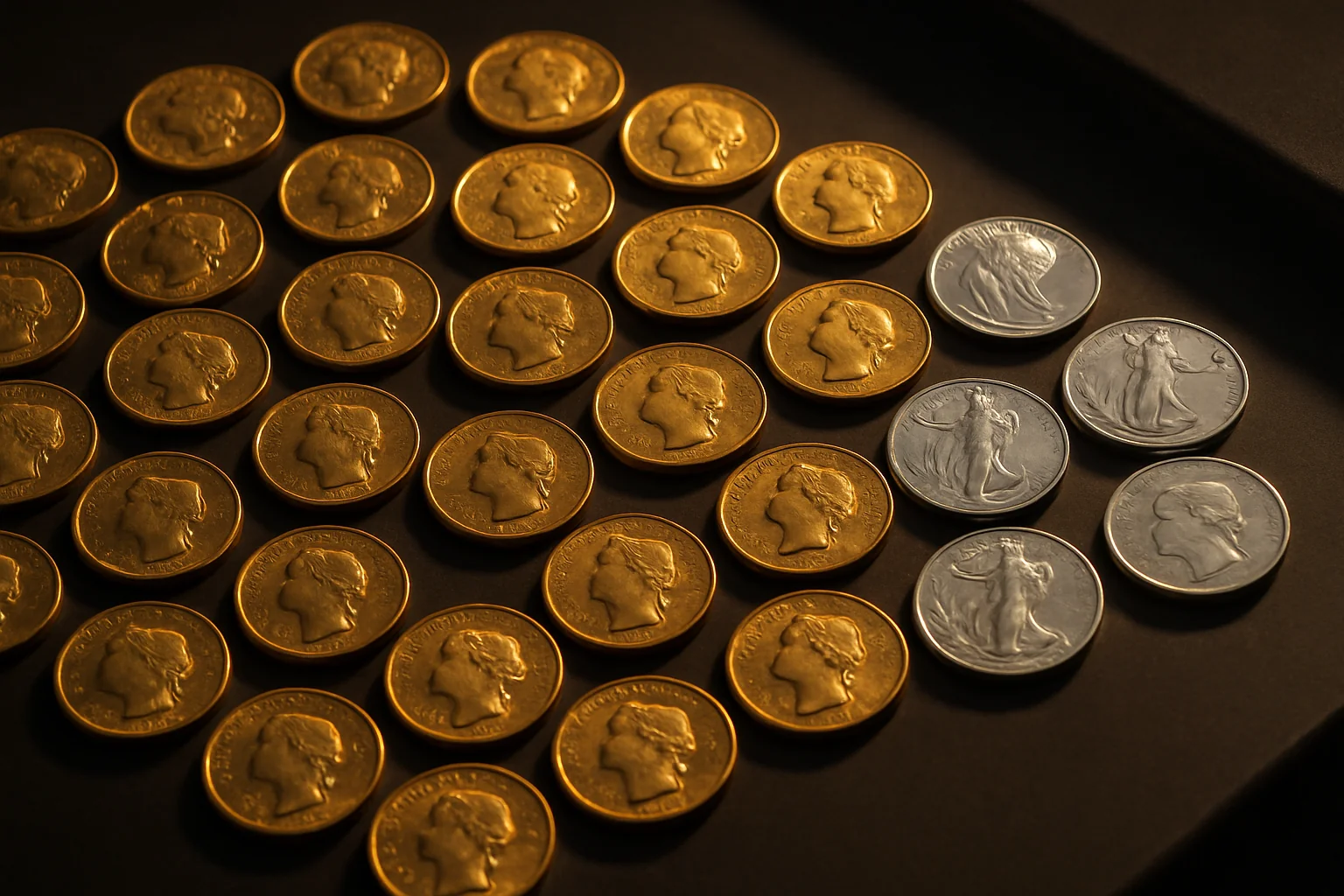
“How much gold should I own?” is the question every new bullion buyer asks. The honest answer is that there is no single number — but decades of portfolio research and mainstream advisor guidance cluster around a clear range, and the logic behind it is straightforward.
The short answer: 5–15%
Across mainstream advisors and institutions, the most commonly cited gold allocation is 5% to 15% of a portfolio, with 10% a popular benchmark. Sprott suggests 10–15% to gold and gold-related equities; WisdomTree's research has pointed to roughly 13% as optimal; and some advisors now argue for up to 20% given how strained the traditional 60/40 stock-bond model has become.
What the research actually shows
Gold's value in a portfolio is less about its own return and more about how it behaves relative to everything else. The World Gold Council's analysis finds that adding around 5% gold can cut overall portfolio risk by nearly 5%, while gold's own contribution to total portfolio risk is small. The reason: gold has had near-zero average correlation to equities over the long run, and that correlation tends to turn negative exactly when stocks sell off.
Gold is a clear diversifier… its correlation to equities falls during periods of market stress, which is precisely when investors need diversification most.
— World Gold Council, “The Relevance of Gold as a Strategic Asset”
The 2008 financial crisis is the textbook example. From September 2008 to March 2009, global equities fell at an annualized rate of about 54%, while gold returned roughly +18% — the kind of offset that keeps a portfolio intact through a crash.
How to size your own allocation
| You are… | Suggested gold weight | Why |
|---|---|---|
| Younger, growth-focused | ~5% | A modest hedge without sacrificing long-run growth |
| Balanced / mid-career | ~10% | The classic diversifier weighting |
| Near or in retirement | 10–15% | More emphasis on capital preservation |
| Heavily exposed to crypto or tech | 12–20% | Larger hedge to offset a concentrated, high-volatility book |
Gold as a hedge for a crypto portfolio
If a big share of your net worth sits in Bitcoin or other crypto, gold is a natural counterweight. Both are scarce and outside the banking system, but they move on different drivers — so rotating a portion of crypto gains into physical gold locks in tangible value and softens crypto's volatility without leaving the hard-asset world.
Physical or paper?
How you hold gold matters as much as how much. Paper gold (ETFs, futures) is convenient but reintroduces counterparty and custody risk. Physical, allocated metal in your possession has none of that — it is no one else's liability.
- For a strategic core, favour physical coins and bars from sovereign mints and LBMA refiners.
- Keep the certificate of authenticity; it makes resale and buyback simple.
- Buying with crypto keeps the whole journey — from digital asset to hard asset — outside the traditional banking rails.
Ready to convert crypto into gold?
Buy investment-grade gold and silver with Bitcoin, priced live to the market and shipped fully insured.
Shop bullionFrequently asked questions
How much gold should I own as a percentage of my portfolio?
Does gold actually reduce portfolio risk?
Is 20% too much gold?
Should I buy physical gold or a gold ETF?
This article is for general information only and is not financial advice. Precious-metal and cryptocurrency prices can fall as well as rise. Do your own research and consider speaking to a licensed advisor before investing.
Related reading
Physical Gold vs Bitcoin: Which Is the Better Investment in 2026?
Gold or Bitcoin? A clear-eyed comparison of two scarce assets on volatility, custody, privacy and their role as a hedge — and why the smartest answer is often 'both'.
Read article →
Why Central Banks Are Buying Record Gold — And What It Means for You
Central banks have bought gold at the fastest pace in modern history. Here's the data, who's buying, and what it signals for your own portfolio.
Read article →
Gold Coins vs Gold Bars: Which Should You Buy?
Coins or bars? The right choice comes down to premium, flexibility and how much you're buying. Here's a clear, data-backed breakdown.
Read article →