How to Store Gold and Silver Safely: Home, Vault and Beyond

Once you own physical gold and silver, the next decision is where to keep it. There is no single right answer — the best option depends on how much you hold, how quickly you want access, and your appetite for handling security yourself. This guide breaks down the three main routes, with the trade-offs of each.
The three ways to store bullion
Almost every option falls into one of three buckets: keep it at home, keep it in a bank safe deposit box, or keep it in a professional precious-metals vault. Many investors use a mix — easy access for a small holding, secure off-site storage for the bulk.
| Option | Access | Privacy | Cost | Best for |
|---|---|---|---|---|
| Home storage | Instant | High | One-off (safe) | Smaller holdings, quick access |
| Bank safe deposit box | Bank hours | Medium | Annual rental | Mid-size holdings, low effort |
| Professional vault | By request | Medium | % of value / year | Larger, allocated holdings |
Storing gold and silver at home
Home storage gives you instant, private access with no ongoing fees, which is why many stackers start here. The trade-off is that security and insurance are entirely your responsibility.
- Use a quality safe — ideally a heavy, bolted-down or hidden safe rated for both burglary and fire.
- Be discreet. The biggest risk is someone knowing you hold metal. Don't advertise it.
- Split it up. Consider more than one location rather than a single honey-pot.
- Insure it. Standard home contents policies often cap valuables; you may need a specific rider, which means disclosing the holding to your insurer.
- Keep the paperwork separate — certificates and assay cards stored apart from the metal itself.
Bank safe deposit boxes
A safe deposit box moves the physical security burden to the bank and is inexpensive relative to the protection it offers. The downsides: access is limited to banking hours, the contents are generally not insured by the bank (you insure them separately), and your metal is inside the banking system — which some crypto-native buyers specifically want to avoid. Availability has also shrunk as banks reduce box services.
Professional precious-metals vaults
For larger holdings, specialist vaults offer the highest level of security, full insurance and, crucially, allocated storage — meaning specific bars or coins are recorded as yours, segregated from the vault operator's assets. You pay a small annual fee (typically a fraction of a percent of value).
- Insist on allocated, segregated storage — not pooled or “unallocated” claims.
- Confirm independent audits and that the metal is insured at full value.
- Understand how quickly you can take physical delivery if you want it.
- Be wary of any “storage” offer that won't tell you exactly where your metal is — that is a classic scam red flag (US CFTC).
A warning sign is an agreement that does not identify where the physical metal is located, or that claims to deliver metal to an overseas storage facility.
— US Commodity Futures Trading Commission, fraud advisory (paraphrased)
Why buying with crypto fits self-storage
One advantage of buying physical metal with crypto from a dealer like BTC Mints is that you take delivery of the actual bars and coins — they are yours, in your possession, no third-party custodian required. That is the whole point for many crypto-native buyers: an asset that, like self-custodied Bitcoin, depends on no exchange, bank or platform. You decide where it lives.
A simple storage plan
If you're starting out: keep a small, easily accessible amount in a good home safe, insure it, and stay discreet. As your holding grows, move the bulk to an allocated professional vault or split across locations. Whatever you choose, keep your certificates safe and separate — they make any future sale or our 7-day buyback straightforward.
Ready to convert crypto into gold?
Buy investment-grade gold and silver with Bitcoin, priced live to the market and shipped fully insured.
Shop bullionFrequently asked questions
What is the safest way to store gold at home?
Should I store gold in a bank?
What is allocated storage?
Is it safe to keep gold at home?
Related reading

How to Buy Gold with Crypto: The Complete 2026 Guide
Turn Bitcoin, Ethereum, USDT and more into real, allocated gold — here's exactly how the process works, end to end.
Read article →
How to Buy Gold Online Safely: A 2026 Buyer's Guide to Avoiding Scams
Buying gold online is safe — if you know what to look for. The red flags, the checks, and how to buy bullion with confidence.
Read article →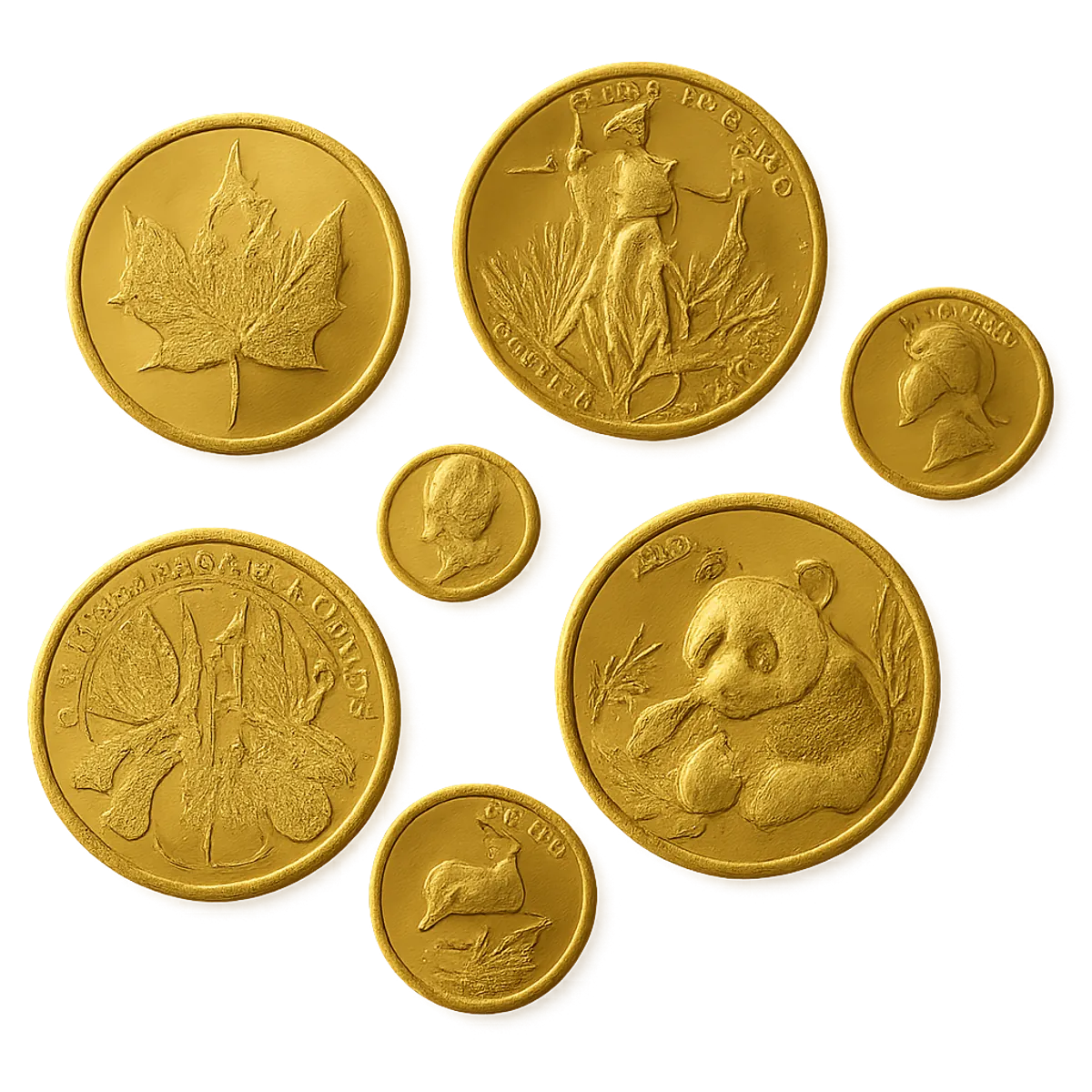
Best Gold Coins to Buy for Investment in 2026
A buyer's guide to the best 1 oz gold investment coins in 2026 — comparing the Maple Leaf, Krugerrand, Buffalo, Britannia and Philharmonic on purity, premium and resale.
Read article →