How to Dollar-Cost Average Into Gold & Silver (2026 Strategy)
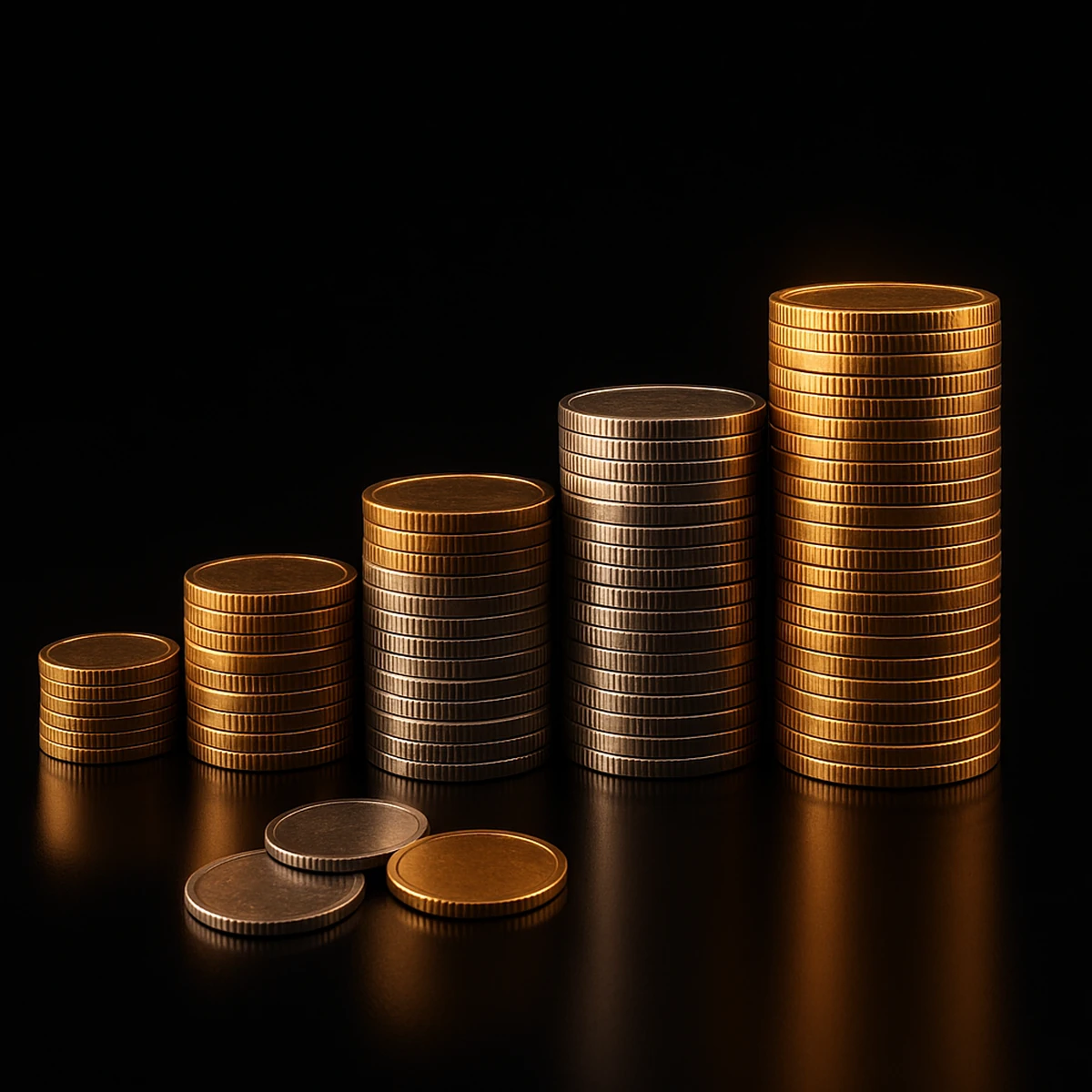
Dollar-cost averaging into gold and silver means buying a fixed dollar amount at regular intervals — say every month — regardless of the price. It's a good fit for precious metals precisely because they're volatile: instead of trying to guess the bottom, you buy at many price points, which smooths your average cost and takes the emotion out of the decision. This guide gives you a concrete monthly plan with the math worked out, what to actually buy, how to split between gold and silver, and an honest look at when dollar-cost averaging beats investing a lump sum.
Why dollar-cost averaging suits gold and silver
Gold routinely swings 10–15% within a quarter, and silver moves two to three times as much. Trying to time those swings is a losing game for most people. Dollar-cost averaging (DCA) sidesteps it entirely:
- You buy more metal when prices dip and less when they spike, so your average cost lands between the extremes automatically.
- It removes timing risk — you never have to guess whether today is a top or a bottom.
- It removes emotion by turning buying into a routine rather than a decision.
- One caveat: with physical metal you pay a premium on each purchase, so stick to low-premium products and don't buy so frequently that fees eat your returns.
A simple monthly plan (with the math)
Notice how the dip month (Month 2) quietly bought the most metal. That's the whole point — DCA leans you into weakness without you having to make a call. Automate it and the discipline takes care of itself.
| Month | Gold spot | $210 buys | Silver spot | $90 buys |
|---|---|---|---|---|
| Month 1 | $4,180/oz | 0.0502 oz | $63/oz | 1.43 oz |
| Month 2 (dip) | $3,900/oz | 0.0538 oz | $58/oz | 1.55 oz |
| Month 3 (spike) | $4,600/oz | 0.0457 oz | $70/oz | 1.29 oz |
What to buy when you're dollar-cost averaging
See our best gold bars and best gold coins guides for the most cost-efficient products.
- Recognisable, low-premium gold: one-ounce coins (Krugerrand, Maple Leaf, Britannia) or small gram bars and Valcambi CombiBars for fractional buying.
- Silver for smaller budgets: 1 oz coins and rounds or small bars — silver is far cheaper per ounce, so it's accessible for modest monthly sums (it just needs more storage space).
- Avoid tiny 1-gram gold bars for every purchase if premiums are steep; batch up to a more efficient size when you can.
How to split between gold and silver
The gold-silver ratio — how many ounces of silver equal one ounce of gold — is a useful guide. In mid-2026 it sits around 66:1, close to its long-run average. A common rule of thumb: when the ratio runs high (above ~80:1) silver looks relatively cheap and worth favouring; when it's low (below ~60:1) gold looks better value. Typical splits range from conservative (mostly gold, a little silver) to growth-oriented (more silver for its bigger swings). Our gold-silver ratio guide explains how to use it.
DCA vs lump sum — the honest answer
It's worth being straight about this. Vanguard's well-known research found that investing a lump sum beat dollar-cost averaging about two-thirds of the time, because markets (and metals, over the long run) tend to rise more often than they fall — so money in sooner usually wins. But that's an average across many scenarios. DCA wins on a different measure: it reduces the risk and the regret of putting a large sum in right before a downturn. The practical takeaway: if you have a windfall and a long horizon, a lump sum has the mathematical edge; if you're investing out of monthly income, or you'd lose sleep deploying everything at once, steady DCA is the disciplined, lower-stress choice. Many people do both — a base position now, then top up monthly.
Gold, silver and your portfolio in 2026
Precious metals are widely used as an inflation and debasement hedge — a store of value that tends to hold purchasing power when currencies weaken. The World Gold Council's research points to an optimal gold allocation around 5–8% for a typical portfolio, with total precious-metals allocations of 5–15% common. How much you hold is personal; our how much gold should you own guide walks through it. This is educational content, not financial advice — metals can fall as well as rise.
Start your monthly stack with crypto
At BTC Mints you can buy gold and silver with Bitcoin, Monero, Ethereum or stablecoins, from small fractional pieces up to kilo bars — priced live with a transparent premium, no card or FX fees, and discreet insured delivery. It's a simple way to turn a monthly crypto budget into a steady, tangible stack. Browse the shop to begin.
Ready to convert crypto into gold?
Buy investment-grade gold and silver with Bitcoin, priced live to the market and shipped fully insured.
Shop bullionFrequently asked questions
What does it mean to dollar-cost average into gold and silver?
Is dollar-cost averaging better than buying gold all at once?
What should I buy when dollar-cost averaging into metals?
How should I split between gold and silver?
Can I dollar-cost average into metals using cryptocurrency?
This article is for general information only and is not financial advice. Precious-metal and cryptocurrency prices can fall as well as rise. Do your own research and consider speaking to a licensed advisor before investing.
Related reading
How Much Gold Should You Own? A Portfolio Allocation Guide
5%, 10%, 15%? What the research actually says about how much gold belongs in a portfolio — and how it fits alongside crypto.
Read article →
The Gold-to-Silver Ratio: How to Use It to Buy Smarter
One simple number — how many ounces of silver equal one ounce of gold — has guided precious-metal investors for centuries. Here's how to read it.
Read article →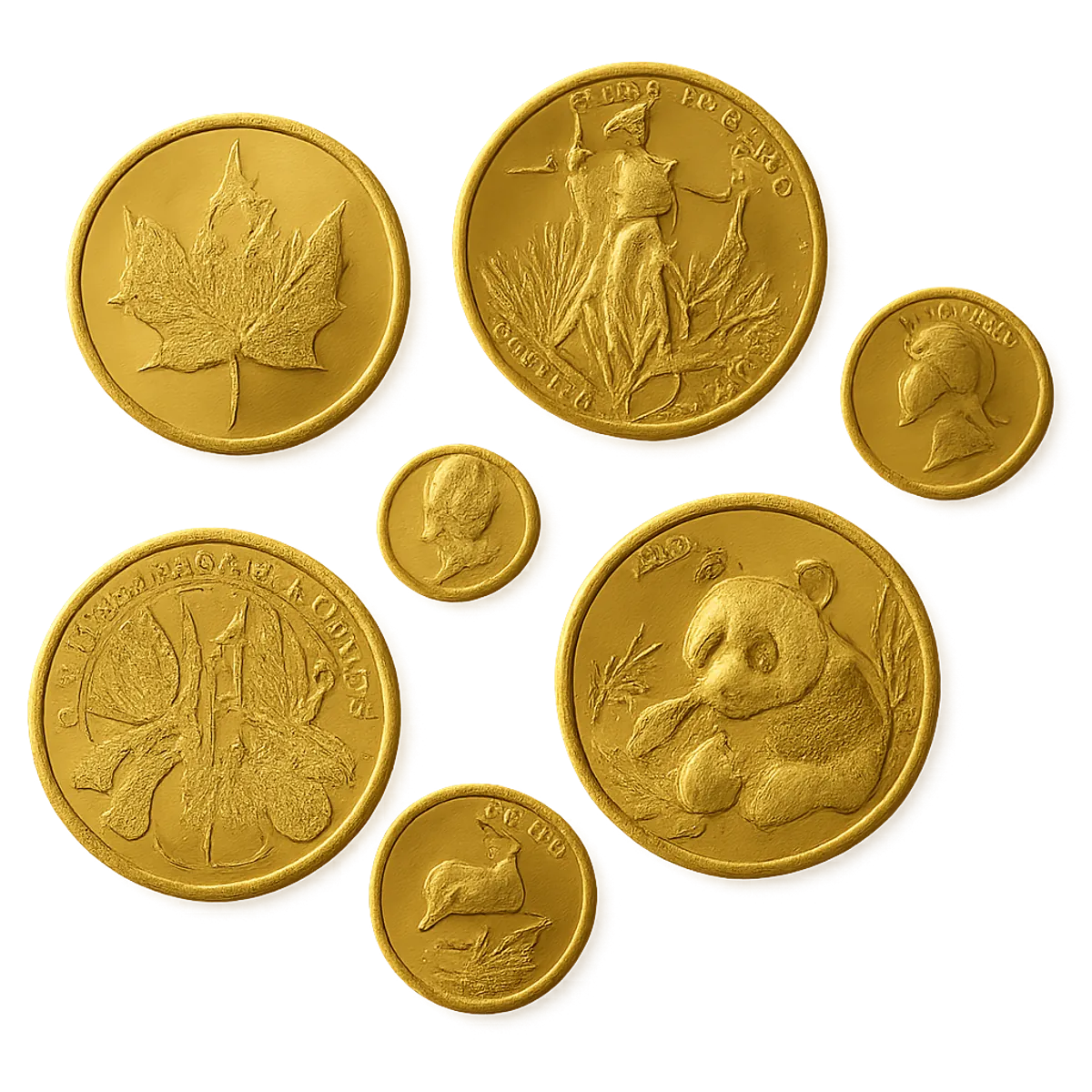
Best Gold Coins to Buy for Investment in 2026
A buyer's guide to the best 1 oz gold investment coins in 2026 — comparing the Maple Leaf, Krugerrand, Buffalo, Britannia and Philharmonic on purity, premium and resale.
Read article →