Is Gold a Good Investment in 2026? An Honest, Data-Backed Answer
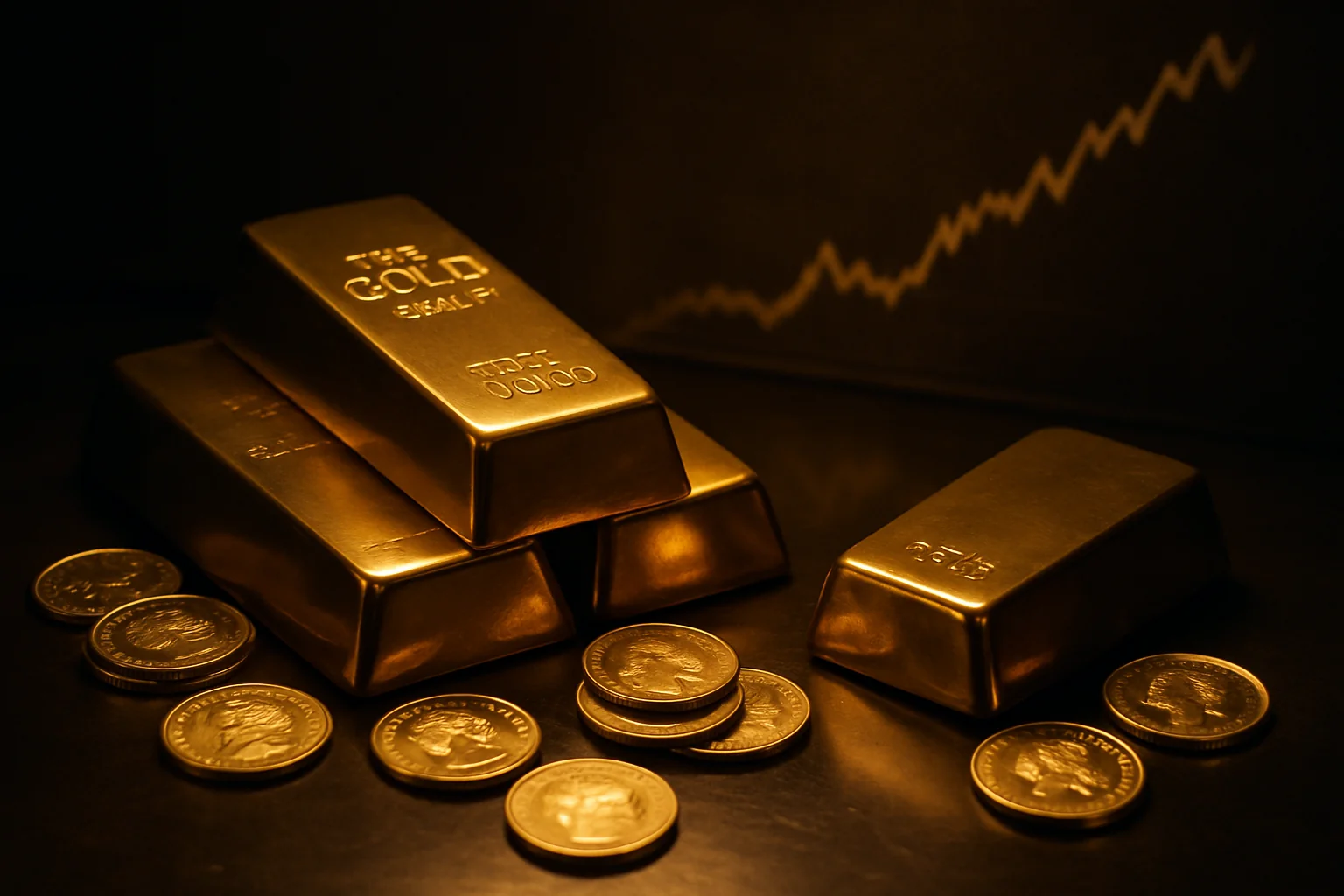
Gold is having a moment. After rising roughly 65% in 2025 — its best year since 1979 — it broke above $5,000 an ounce for the first time in January 2026. That kind of run inevitably raises the question every investor should ask: is gold actually a good investment in 2026, or is the easy money already gone? The honest answer is nuanced, and this guide lays out both sides with the data to back it up.
The case for gold, in numbers
Gold's appeal rests on a long, durable track record rather than any single year. Since the end of the gold standard in 1971, gold has compounded at roughly 8% a year in US dollars — comfortably ahead of inflation (about 4%) and short-term Treasuries (about 4.4%) over the same span, according to the World Gold Council. It is not just a relic; it is a long-term store of value that has broadly tracked global growth.
Why gold is rising now
Three forces have powered gold's 2025–2026 surge, and understanding them tells you whether the move has legs:
- Record central-bank buying — official institutions have bought more than 1,000 tonnes a year for three straight years, diversifying away from the US dollar (World Gold Council).
- The “debasement trade” — large fiscal deficits and concern about currency debasement push investors toward hard assets. Goldman Sachs reaffirmed a year-end 2026 target of $5,400 on this thesis.
- Falling real rates and geopolitical risk — gold tends to do well when the opportunity cost of holding a non-yielding asset falls and uncertainty rises.
What gold does for a portfolio
Gold's real value is not as a get-rich-quick trade but as a diversifier. It has had near-zero average correlation with equities over the long run, and that correlation tends to turn negative precisely when stocks fall — which is why a modest allocation can lower a portfolio's overall risk. In the depths of the 2008 crisis, gold rose around 18% while global equities fell more than 50%.
Gold benefits from diverse sources of demand… it has historically delivered positive returns over the long run, in periods of both economic growth and contraction, and has reduced portfolio risk.
— World Gold Council, “The Relevance of Gold as a Strategic Asset”
The honest case against gold
A credible guide has to give the other side. Gold is not a perfect or risk-free asset:
- It produces no income. Gold pays no dividend or interest — “gold does not generate any cash flows,” as the World Gold Council itself notes. Your entire return depends on price.
- It can lag for years. Equities have beaten gold over the full period since 1971 (~10–11%/yr for the S&P 500), and gold endured long flat or falling stretches, notably 1980–2000.
- It carries costs. Physical metal involves storage, insurance and a dealer buy/sell spread.
- Regulators urge caution. The US CFTC even publishes an article bluntly titled “Gold Is No Safe Investment,” a useful counterweight to breathless marketing.
So — is gold a good investment in 2026?
For most people the sensible answer is: yes, as a measured part of a diversified portfolio — not as a one-way bet. Gold is a strategic holding that protects purchasing power, hedges crisis and currency risk, and lowers overall volatility. It is not a substitute for productive, income-generating assets. After a powerful two-year run, it also pays to buy gradually rather than chasing a record price in a single lump sum.
| Gold suits you if… | Gold may not suit you if… |
|---|---|
| You want a hedge against inflation and currency debasement | You need regular income from your investments |
| You hold a lot of equities or crypto and want a diversifier | You can't tolerate multi-year flat periods |
| You value an asset with no counterparty risk | You're chasing the highest possible return and ignore volatility |
| You're converting crypto gains into something tangible | You're uncomfortable with storage/insurance logistics |
How to buy gold sensibly
If gold fits your plan, keep it simple: buy investment-grade coins or bars from sovereign mints and LBMA Good Delivery refiners, size the position to a sensible share of your portfolio (commonly 5–15%), and average in over time. At BTC Mints you can buy gold with Bitcoin and other crypto, priced live to the market with the premium shown separately, and shipped fully insured.
Ready to convert crypto into gold?
Buy investment-grade gold and silver with Bitcoin, priced live to the market and shipped fully insured.
Shop bullionFrequently asked questions
Is gold a good investment in 2026?
Has gold gone up too much to buy now?
Does gold beat the stock market?
What are the downsides of investing in gold?
This article is for general information only and is not financial advice. Precious-metal and cryptocurrency prices can fall as well as rise. Do your own research and consider speaking to a licensed advisor before investing.
Related reading
How Much Gold Should You Own? A Portfolio Allocation Guide
5%, 10%, 15%? What the research actually says about how much gold belongs in a portfolio — and how it fits alongside crypto.
Read article →
Why Central Banks Are Buying Record Gold — And What It Means for You
Central banks have bought gold at the fastest pace in modern history. Here's the data, who's buying, and what it signals for your own portfolio.
Read article →
Physical Gold vs Bitcoin: Which Is the Better Investment in 2026?
Gold or Bitcoin? A clear-eyed comparison of two scarce assets on volatility, custody, privacy and their role as a hedge — and why the smartest answer is often 'both'.
Read article →