LBMA Good Delivery: What Accreditation Actually Guarantees
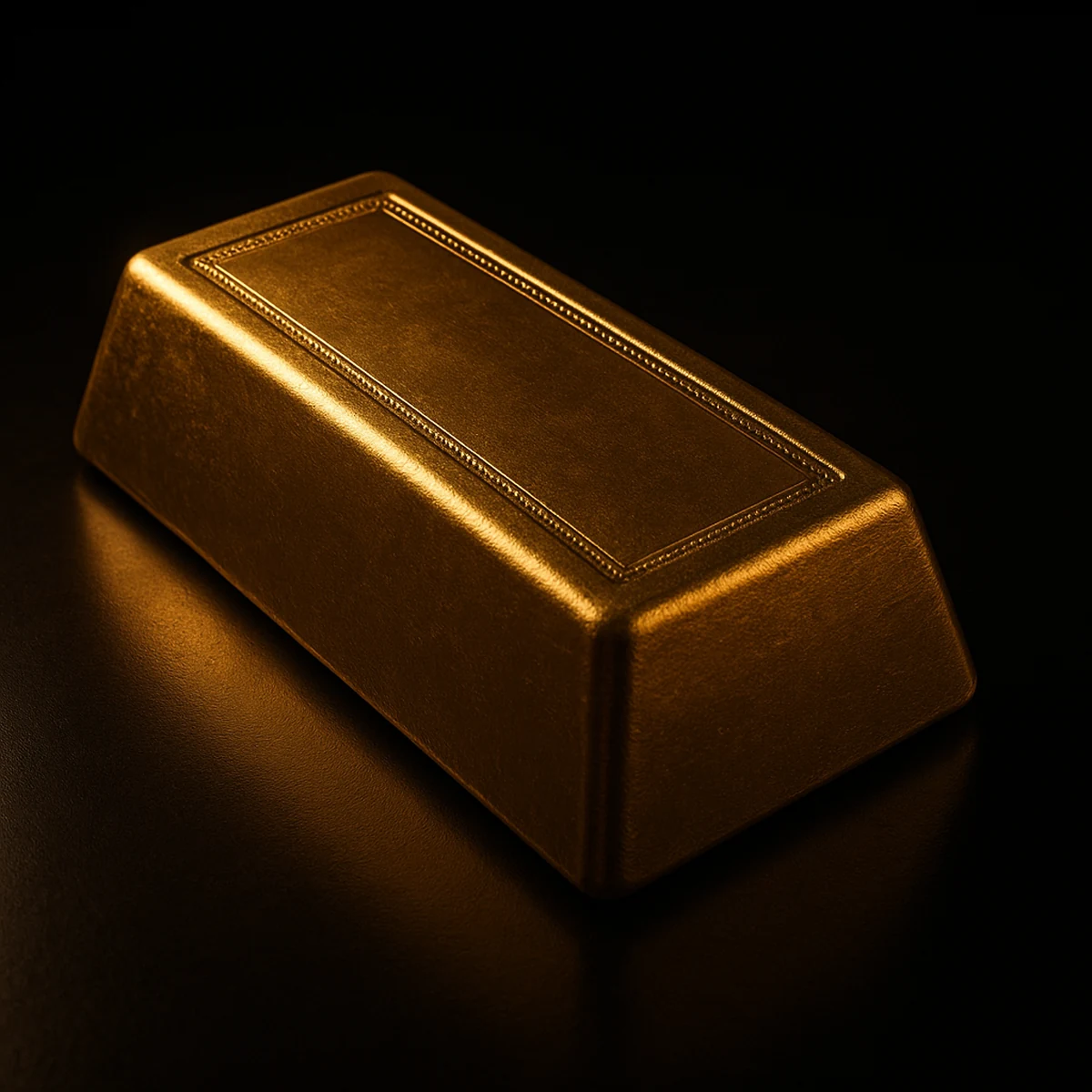
If you have bought a gold bar you have probably seen a refiner's name — Valcambi, PAMP, Argor-Heraeus, Metalor — and been told it is LBMA accredited. That accreditation is the single most useful signal in the bullion market, because it is what lets a dealer anywhere in the world accept your bar without sending it for assay. But it is widely misunderstood: the Good Delivery List certifies the refiner, not every bar with their logo on it, and it formally applies to large wholesale bars rather than the retail ones most people own. Understanding exactly what it does and does not guarantee tells you a great deal about what you are buying.
What is the LBMA Good Delivery List?
The London Bullion Market Association maintains a list of refiners whose large wholesale bars are accepted without question in the London market — the centre of global over-the-counter gold and silver trade. To get on it a refiner must demonstrate minimum annual production, a track record of financial standing, and — critically — must pass a proactive assay test in which sample bars are analysed by independent referees to prove the refiner can consistently hit the required fineness. Accreditation is not a one-off badge: refiners are monitored, must submit to periodic re-testing, and can be and have been removed from the list.
What does the standard actually specify?
For gold, a London Good Delivery bar must contain between 350 and 430 troy ounces of fine gold — nominally 400 oz, about 12.4 kg — at a minimum fineness of 995.0 parts per thousand. Note that figure: it is 99.5 percent, not the 999.9 you see on retail bars. It must carry the refiner's stamp, the fineness, a serial number and the year of manufacture, and meet defined dimensions and surface-quality requirements. Silver Good Delivery bars run roughly 750 to 1,100 troy ounces at a minimum 999 fineness. These are wholesale specifications designed for vault-to-vault transfer between institutions, which is exactly why no retail buyer ever handles one.
Does LBMA accreditation apply to the small bar I own?
Not literally, and this is the point almost every listing glosses over. Good Delivery is a specification for large wholesale bars. Your 100 g or 1 oz bar is not a Good Delivery bar and never was. What accreditation tells you is that the refiner meets the LBMA's standards for assaying, production and probity — and a refiner capable of consistently hitting fineness on 400 oz bars destined for central banks is not going to be careless with a 100 g bar carrying the same logo. So the signal transfers even though the specification does not. When a dealer says a small bar is 'LBMA', they mean it came from an LBMA-listed refiner. That is a meaningful and useful claim; it is just not the same as the bar itself being certified.
Which accredited refiners are worth looking for?
These are the names you will encounter most in retail bullion, all LBMA-listed and all represented in our catalogue:
| Refiner | Country | Known for |
|---|---|---|
| Valcambi | Switzerland | CombiBars, very broad size range |
| PAMP Suisse | Switzerland | Fortuna design, Veriscan authentication |
| Argor-Heraeus | Switzerland | Kinebar holographic security |
| Metalor | Switzerland | Cast and minted bars, strong institutional presence |
| Umicore | Belgium | Plain, low-premium investment bars |
| C. Hafner | Germany | Long-established German refiner |
| Heraeus | Germany | Major industrial and investment refiner |
| The Royal Mint | United Kingdom | Britannia bars and coins |
| Perth Mint | Australia | Government-guaranteed cast bars |
You can browse bars from these refiners across our 1 oz and 100 g ranges, and see the full size ladder in our guide to gold bar sizes and prices. Within this set, choose on cost per ounce rather than on brand — the metal and the liquidity are equivalent.
Why does accreditation affect what you can sell for?
Because it removes the buyer's doubt, and doubt is expensive. When you sell a bar from an accredited refiner with its assay card intact and serial number matching, the dealer can verify it on sight and quote immediately. An unbranded bar, or one from an unknown refiner, may need XRF testing, specific-gravity checks or a destructive assay — and that cost, plus the risk, comes out of your price. This is why the two practical rules from our guide on selling gold bullion matter so much: buy accredited, and never break the seal. The premium difference between an accredited and non-accredited bar at purchase is usually far smaller than the spread difference when you sell.
Is an LBMA bar guaranteed not to be counterfeit?
No, and anyone who tells you otherwise is overselling it. Accreditation certifies the refiner's processes; it cannot stop a third party from faking a logo. Counterfeiters target well-known brands precisely because those brands are trusted, and sophisticated fakes with tungsten cores exist. What accreditation gives you is a known specification to check against — exact weight, exact dimensions, serial number, and often a refiner-specific security feature such as PAMP's Veriscan surface-mapping or Argor-Heraeus's Kinebar hologram. Verify weight to 0.01 g and dimensions with calipers, keep the bar sealed, and buy from a dealer who stands behind what they sell. Our guide on spotting fake gold and silver walks through each check in detail.
Ready to convert crypto into gold?
Buy investment-grade gold and silver with Bitcoin, priced live to the market and shipped fully insured.
Shop bullionFrequently asked questions
What is LBMA Good Delivery?
What are the specifications of a Good Delivery gold bar?
Is my 100 g bar an LBMA Good Delivery bar?
Which refiners are LBMA accredited?
Does LBMA accreditation guarantee a bar is genuine?
Related reading

How to Spot Fake Gold & Silver: The 2026 Testing Guide
The tests that actually work for checking gold and silver at home, why tungsten fakes beat most of them, the professional tools that catch them, and the simplest way to never buy a fake.
Read article →
Best Gold Bars to Buy in 2026 (1g to 1kg): Brands, Sizes & Premiums
PAMP, Valcambi, Argor-Heraeus and more compared — plus how gold bar premiums scale from 1g to 1kg, cast vs minted, and how to verify a bar is genuine.
Read article →
How to Sell Gold Bullion in 2026: Getting the Best Price Without Being Fleeced
Selling gold is where inexperienced owners lose the most money. The spread, the paperwork and the format you chose years ago all decide what you actually walk away with.
Read article →