Gold Bar Sizes and Prices 2026: Every Size Compared

Gold bars are made in a wide range of sizes, and the one you choose has a larger effect on what you pay per ounce than the brand stamped on it. Fabrication cost is broadly fixed per bar, so it is spread thinly across a kilo and thickly across five grams. At today's spot of $4,343.30 per troy ounce the difference between the cheapest and dearest size in our range is substantial — and entirely predictable. This guide lists every size we stock with live prices, shows the real cost per ounce at each, explains what the standard sizes physically look like, and helps you decide which suits how much you are buying.
What gold bar sizes can you actually buy?
Bars fall into three broad groups. Gram bars from 5 g to 100 g are the retail mainstay, especially across Europe and Asia. Ounce-denominated bars of 1 oz, 5 oz and 10 oz dominate in the US and UK. Large bars of 250 g, 500 g, 1 kg and above serve serious accumulators, and above that sits the 400 oz London Good Delivery bar used between banks and central banks — roughly 12.4 kg and around $1,737k at today's price, which is why you will never see one offered retail.
What does each gold bar size cost today?
Live prices across the full range in stock:
| Size | Fine gold | Price | Cost per troy ounce |
|---|---|---|---|
| 5 g | 0.161 oz | $663.28 | $4,126.16 |
| 10 g | 0.322 oz | $1,326.59 | $4,126.12 |
| 20 g | 0.643 oz | $2,653.10 | $4,126.06 |
| 1 oz | 1.000 oz | $4,126.13 | $4,126.13 |
| 50 g | 1.608 oz | $5,969.63 | $3,713.52 |
| 100 g | 3.215 oz | $11,939.23 | $3,713.52 |
| 5 oz | 5.000 oz | $18,567.61 | $3,713.52 |
| 250 g | 8.038 oz | $29,848.13 | $3,713.52 |
| 10 oz | 10.000 oz | $37,135.21 | $3,713.52 |
| 500 g | 16.075 oz | $59,696.23 | $3,713.52 |
| 1 kg | 32.151 oz | $119,392.50 | $3,713.52 |
| 5 kg | 160.754 oz | $596,962.41 | $3,713.52 |
Read down that last column and the pattern is unmistakable: a 5 g bar costs about $4,126.16 per ounce against roughly $3,713.52 on a kilo — a difference of around 11.1 percent for identical metal. On a $10,000 purchase that gap is real money, and it is the single most consequential decision in buying bars.
How big is a gold bar physically?
Much smaller than people expect, because gold is extraordinarily dense at 19.3 g/cm³. A 100 g bar occupies barely 5 cm³ — roughly the footprint of a credit card and about 4 mm thick. A 1 kg bar is about 52 cm³, comparable to a small mobile phone but startlingly heavy in the hand. The 400 oz Good Delivery bar that fills vault photographs weighs 12.4 kg, which is why lifting one is genuinely difficult. Minted bars up to about 100 g are pressed from rolled sheet with sharp edges and a mirror finish, and normally arrive sealed in an assay card; cast bars from 250 g upward are poured into moulds and look deliberately rougher. Our guide on bullion condition explains why a rustic-looking cast bar is not a damaged one.
Which gold bar size should you buy?
- Under $1,500 — a 1 oz bar at $4,126.13 is the sweet spot; gram bars below this cost noticeably more per ounce
- $1,500 to $15,000 — 50 g and 100 g bars are the European standard and price well
- $15,000 to $60,000 — 250 g and 500 g bars move you close to institutional pricing
- $60,000 and above — a 1 kg bar at $119,392.50 gives the best cost per ounce of any practical retail size
- Want divisibility? — several smaller bars beat one large one, and you pay for that flexibility
Is a bigger bar always the better buy?
No, and the exception matters. A bar is indivisible: if you own one kilo bar worth $119,392.50 and need to raise $10,000, you must sell the whole thing. Someone holding ten 100 g bars sells one and keeps the rest. That flexibility is worth real money to anyone who might need partial liquidity, and it is exactly why smaller bars carry higher premiums — you are paying for optionality, not being overcharged. There is also concentration risk: a single large bar is one item to lose, one item to have disputed. A common sensible structure is a large bar as the core holding plus a few smaller ones for flexibility, which is the same logic covered in selling gold bullion.
Does the refiner matter as much as the size?
Less than most buyers assume, provided you stay with accredited names. A 100 g bar from an LBMA-accredited refiner — Valcambi, PAMP, Argor-Heraeus, Metalor, Umicore, C. Hafner — contains the same gold and resells with the same ease. Brand affects premium at the margin and matters most for the smallest bars, where packaging and design are a larger share of cost. What genuinely affects resale is not the logo but whether the assay card is intact and the serial number matches. Buy on cost per ounce within the accredited set, and keep the packaging sealed.
Ready to convert crypto into gold?
Buy investment-grade gold and silver with Bitcoin, priced live to the market and shipped fully insured.
Shop bullionFrequently asked questions
What are the standard gold bar sizes?
What size gold bar is the best value?
How big is a 1 kg gold bar?
How much is a 1 kg gold bar worth?
Are small gold bars a bad idea?
Related reading
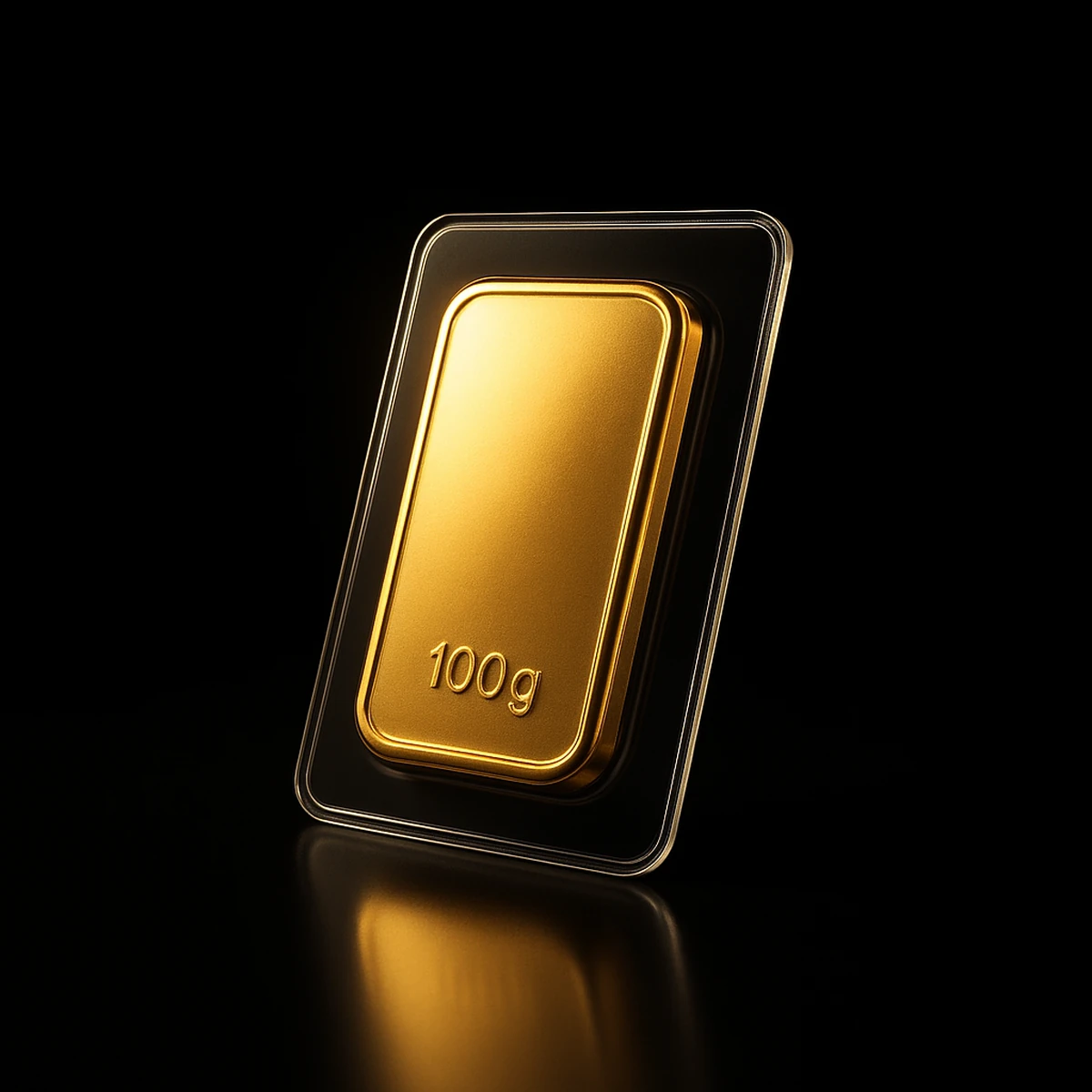
100g Gold Bar: Price, Specs & Buying Guide (2026)
How much a 100g gold bar is worth, the formula to work it out at any spot price, exact specs, the premium you should expect, and which refiner's bar to choose.
Read article →
Gold Price Per Kilo in 2026: USD & EUR Explained
How much is a kilo of gold worth in 2026, in both dollars and euros? Live conversions, why the euro figure moves separately, and how to buy a 1 kg gold bar with crypto.
Read article →
Best Gold Bars to Buy in 2026 (1g to 1kg): Brands, Sizes & Premiums
PAMP, Valcambi, Argor-Heraeus and more compared — plus how gold bar premiums scale from 1g to 1kg, cast vs minted, and how to verify a bar is genuine.
Read article →