Milk Spots, Toning and Scratches: What Actually Affects Bullion Value
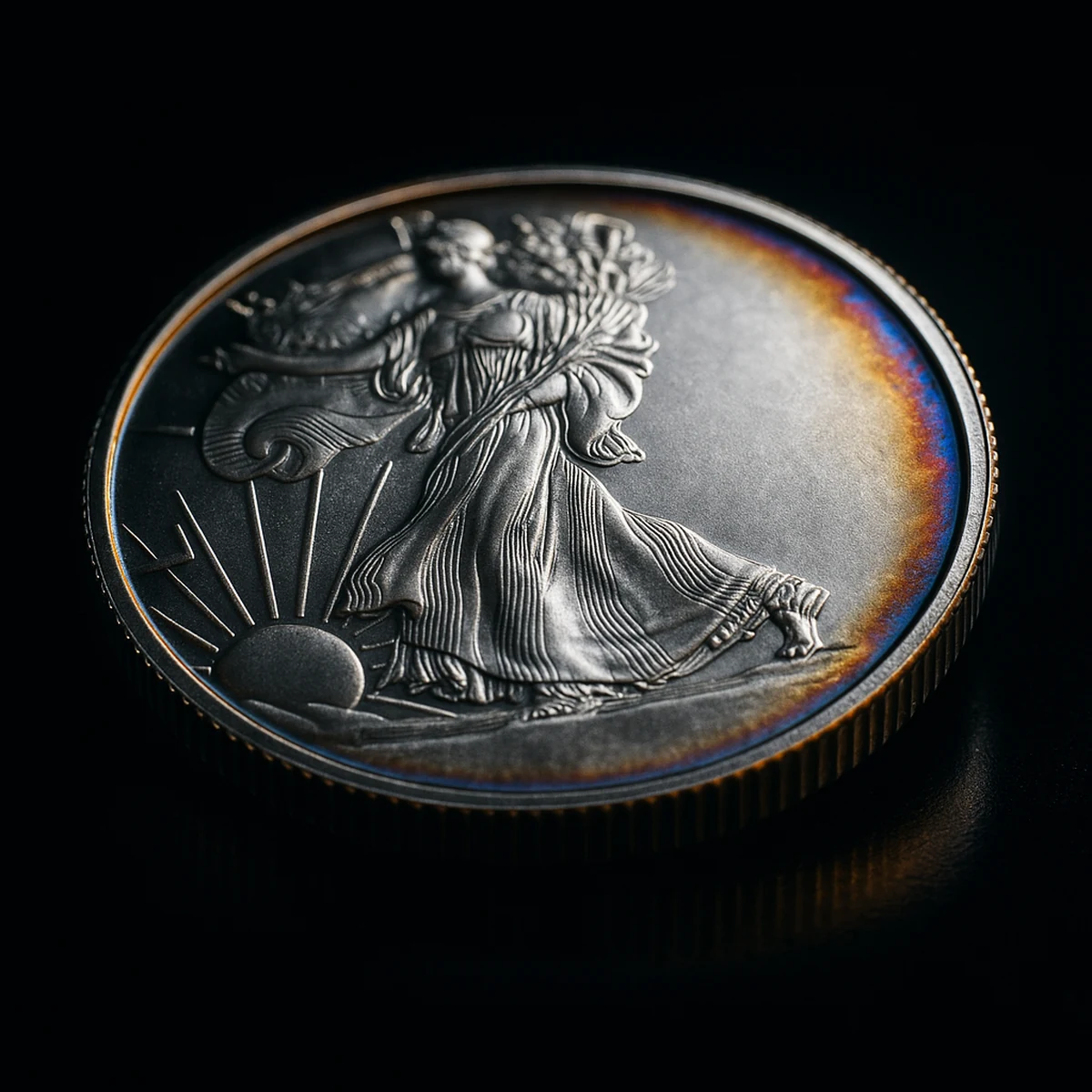
Every bullion owner eventually finds a mark they did not expect: white haze on a silver coin, a rainbow tint at the rim, a scuff on a bar edge, a fingerprint that will not lift. The near-universal first reaction is that the piece is ruined. Usually it is not. For bullion sold on metal content, the overwhelming majority of surface issues change nothing about what you will be paid, because you are selling grams of metal rather than a preserved surface. But some marks genuinely do matter, and a few cause real loss. This guide separates the two, using the specific problems that come up most often.
What are milk spots and do they reduce value?
Milk spots are small, opaque whitish blemishes that appear on silver — most notoriously on 999.9 Maple Leaf-family coins — often months or years after minting. The generally accepted cause is residue from the minting process, typically cleaning or annealing agents not fully rinsed before striking, which slowly reacts at the surface. They are frustrating precisely because they can appear on a coin that left the mint flawless. For bullion value the answer is simple: they change nothing. A spotted one-ounce coin contains exactly one ounce of silver and sells for the bullion price. They matter in one context only — graded and collectible coins, where surface quality is the value. If that is your market, buy in sealed original packaging and store carefully.
Is toning damage or is it desirable?
Toning is oxidation: silver reacting with sulphur compounds in air, paper, felt or PVC over time, producing anything from a light golden haze to deep blues and purples. It is not corrosion and it does not consume meaningful metal. Among collectors, attractive natural toning is often prized and can add a premium, while blotchy or artificial toning detracts. For bullion, it is neutral — the silver content is unchanged. The important practical point is the cause: PVC-containing plastic flips are the main avoidable culprit, because PVC degrades and releases compounds that attack the surface. Use inert holders, and see our guide on storing gold and silver safely.
Which marks actually cost you money?
| Issue | Effect on bullion value | Effect on graded value |
|---|---|---|
| Milk spots | None | Significant |
| Natural toning | None | Varies — can add or subtract |
| Light handling marks | None | Moderate |
| Fingerprints | None to minimal | Significant if etched in |
| Rim dings on a bar | Usually none | N/A for bars |
| Broken or opened assay card | Real — may need verification | N/A |
| Cleaning or polishing | Minimal | Severe and permanent |
| Deep gouges or cuts | Real if weight is affected | Severe |
Two entries deserve emphasis. Opening a sealed assay card is the most common self-inflicted loss in the whole of bullion ownership — an intact seal lets a dealer price a bar on sight, and breaking it can mean verification costs that come out of your bid. And cleaning is irreversible: it strips original surfaces, is instantly recognisable to any experienced buyer, and destroys numismatic value permanently. If a coin looks dirty, leave it alone.
My new bar arrived with scuffed edges — is that normal?
For cast bars, yes, and it is expected. A cast bar is poured into a mould and cooled, so irregular edges, surface pitting, slight ripples and small variations in shape are inherent to the process rather than signs of damage or mishandling. Minted bars are cut from rolled sheet and pressed, giving sharp edges and a mirror finish — those should arrive crisp, and are normally sealed in an assay card that protects them. If a minted bar arrives with genuine transit damage or a compromised seal, that is worth raising with your dealer. If a cast bar looks rustic, that is simply what a cast bar is, and it carries the same metal at a slightly lower premium. Our guide to gold bars covers the cast versus minted distinction in more detail.
How do you tell a defect from a fake?
This is the distinction actually worth your attention, because cosmetic worry distracts from the real risk. Surface blemishes are not evidence of a counterfeit; wrong dimensions and wrong weight are. Every genuine bullion item has a precise specified weight and diameter, and fakes almost always miss one because no substitute metal matches gold's extraordinary density. Check weight on a scale accurate to 0.01 g, check diameter and thickness with calipers, and use the ping test or a magnet slide as a supporting check. A magnet is decisive in one direction: gold and silver are not magnetic, so any attraction is a red flag. Our full guide on spotting fake gold and silver walks through each test.
How should you store bullion to avoid all of this?
Prevention is straightforward and cheap. Leave items in their original capsules, tubes and assay cards — the packaging is doing a job. Avoid PVC flips entirely. Handle coins by the edge, and only when you need to, because skin oils etch surfaces over time. Keep storage dry, since humidity accelerates toning, and consider silica gel in a safe. Do not store silver loose against other coins where they can rub. None of this affects what your metal is worth as bullion, but it costs nothing to do properly and it preserves your options if you ever want to sell into the graded market. When you do come to sell, our guide on selling gold bullion covers what dealers look for.
Ready to convert crypto into gold?
Buy investment-grade gold and silver with Bitcoin, priced live to the market and shipped fully insured.
Shop bullionFrequently asked questions
Do milk spots reduce the value of silver coins?
What causes milk spots on silver?
Is toning on silver bad?
Should I clean my bullion coins?
My gold bar has scuffed edges — is it damaged?
Related reading

How to Spot Fake Gold & Silver: The 2026 Testing Guide
The tests that actually work for checking gold and silver at home, why tungsten fakes beat most of them, the professional tools that catch them, and the simplest way to never buy a fake.
Read article →
How to Store Gold and Silver Safely: Home, Vault and Beyond
Owning bullion is only half the job — keeping it safe is the other. A practical guide to home, bank and vault storage.
Read article →
Best Gold Bars to Buy in 2026 (1g to 1kg): Brands, Sizes & Premiums
PAMP, Valcambi, Argor-Heraeus and more compared — plus how gold bar premiums scale from 1g to 1kg, cast vs minted, and how to verify a bar is genuine.
Read article →