Chinese Gold Panda 2026: Why It Is Sold in Grams, Not Ounces
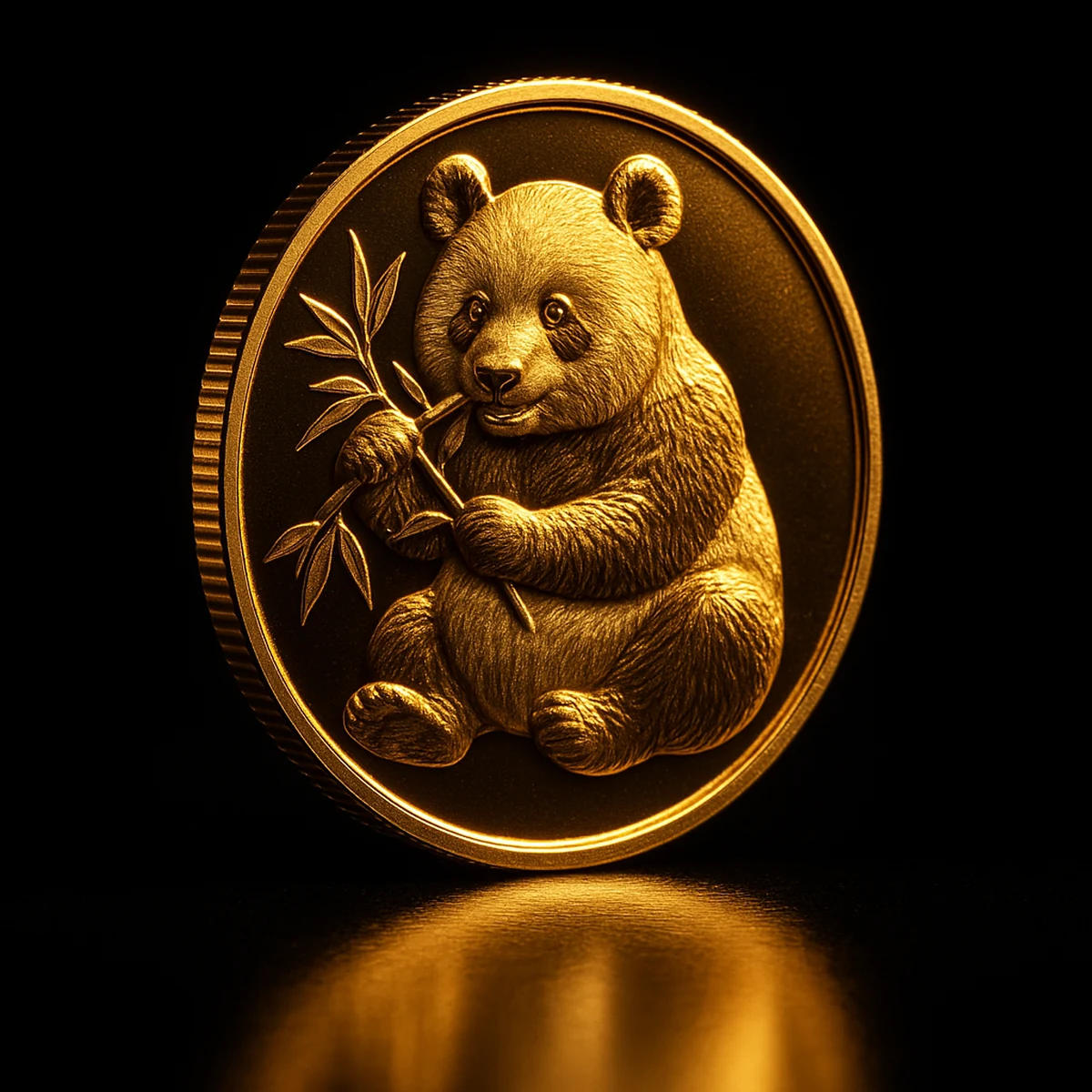
A 30 g Chinese Gold Panda is worth about $4,089.24 as of September 2026, with gold at $4,462.80 per troy ounce. The Panda is unlike every other major bullion series in two ways that matter commercially. It is denominated in grams rather than troy ounces — China made that switch in 2016 — and its design changes every single year, giving it a collectible dimension most bullion lacks. It is also 999 fine rather than 999.9, a small difference that confuses buyers comparing it with a Maple Leaf. This guide covers what each size costs, why the gram switch happened, and when the Panda makes sense.
How much is a Chinese Gold Panda worth today?
The most common modern size, the 30 g, is worth about $4,089.24 at a gold price of $4,462.80 per troy ounce. Thirty grams is 0.9645 troy ounces — slightly less than the one-ounce coins it replaced, which is the single most important thing to understand when comparing prices. Check our live prices before buying.
Why did China switch the Panda from ounces to grams?
To align the coin with China's own measurement system and its domestic market, which prices gold in grams. From 1982 until 2015 the Panda was struck in troy ounce sizes — 1/20, 1/10, 1/4, 1/2 and 1 oz. From 2016 the series moved to metric: 1 g, 3 g, 8 g, 15 g, 30 g, and larger 100 g, 150 g and 1 kg pieces. The 30 g coin replaced the 1 oz, and because 30 g is 0.9645 oz, a modern Panda contains about 3.5 percent less gold than the pre-2016 one-ounce version. Sellers occasionally compare a 30 g Panda price against a 1 oz coin price and present it as a bargain. It is not — it is simply a smaller coin. Always compare on cost per troy ounce, which is the column we publish below.
What does each Gold Panda size cost?
| Size | Fine gold | Price | Cost per troy ounce |
|---|---|---|---|
| 3 g | 0.0965 oz | $408.92 | $4,239.71 |
| 8 g | 0.2572 oz | $1,090.48 | $4,239.65 |
| 15 g | 0.4823 oz | $2,044.62 | $4,239.66 |
| 30 g | 0.9645 oz | $4,089.24 | $4,239.66 |
| 1 oz (pre-2016) | 1.0000 oz | $4,239.66 | $4,239.66 |
Is the Panda 24 karat?
Effectively yes, but the number is 999, not 999.9. That is 99.9 percent pure against the 99.99 percent of a Maple Leaf, Kangaroo or Philharmonic. Commercially the difference is negligible — both are refined investment gold and trade against the same spot price — but it does mean a Panda is not the coin to choose if a buyer or programme specifically demands 999.9 fineness. The stated gram weight is the fine gold content, so a 30 g Panda contains 30 g of gold regardless of the fineness figure.
Does the yearly design change add value?
Sometimes, and more reliably than with other series. The Panda has carried a new panda design every year since 1982, with one interruption: the 2002 coin repeated the 2001 design, and the public reaction was negative enough that China reinstated the annual change permanently. Because mintages vary by year and some designs are far more popular, particular dates do develop genuine collector premiums above melt — the Panda has the most active date-collecting market of any modern bullion coin. Two practical consequences. If you are buying bullion, buy on cost per ounce and ignore the year. If you are buying collectible, condition is everything, which leads directly to the next point.
Why should you never break the Panda's seal?
Pandas leave the mint sealed in clear plastic, and that packaging is doing real work. Chinese Pandas are known for developing surface spotting, and an intact factory seal both protects the surface and proves the coin has not been swapped or handled. A sealed Panda in original packaging prices faster and higher than a loose one, particularly in the collector market where the annual designs matter. Our random-year unsealed 1 oz is priced as pure bullion for exactly this reason. If you buy sealed, leave it sealed — see bullion condition for why surface damage is one of the few things that genuinely costs money.
Should you buy a Panda as bullion?
Only with your eyes open. As pure metal the Panda usually carries a higher premium than a Krugerrand, Maple Leaf or Philharmonic, because you are partly paying for the collectible dimension. If your goal is maximum gold per dollar, a Krugerrand or a larger bar beats it comfortably. The Panda earns its place if you want a coin with genuine collector upside alongside its metal, or if you specifically want gram-denominated gold. Every Panda here can be bought with Bitcoin, Monero, Ethereum or stablecoins, with the price locked at order and shipped fully insured in plain, unmarked packaging.
Ready to convert crypto into gold?
Buy investment-grade gold and silver with Bitcoin, priced live to the market and shipped fully insured.
Shop bullionFrequently asked questions
How much is a 30 g Chinese Gold Panda worth?
Why is the Gold Panda sold in grams instead of ounces?
Is the Chinese Gold Panda 999 or 999.9 fine?
Does the Gold Panda design change every year?
Should I remove a Gold Panda from its plastic seal?
Related reading
Australian Gold Kangaroo 2026: Price, Sizes and the Design That Changes Yearly
A 1 oz Gold Kangaroo costs about $4,239.66 today. It is the only major bullion coin whose design changes every single year — which is either its best feature or an irrelevance, depending on why you buy.
Read article →
Vienna Gold Philharmonic 2026: Europe's Best-Selling Gold Coin
A 1 oz Vienna Philharmonic costs about $4,239.66 today. It is the only major bullion coin with a euro face value, and the design has not changed once since 1989.
Read article →
Fractional Gold Coins: 1/10, 1/4 & 1/2 oz Guide (2026)
1/10, 1/4 and 1/2 oz gold coins explained — exact weights, what they cost at today's spot, the real reason premiums are higher, and which fraction actually makes sense.
Read article →